Emergency Demolition Services in Calgary: When You Need Immediate Response
Disasters don't follow schedules. A fire tears through a commercial building at 2 AM. A severe storm collapses a garage roof on a Saturday afternoon. Foundation failure makes a home uninhabitable without warning.
When these situations occur, property owners face immediate decisions about safety, liability, and next steps. Emergency demolition services exist precisely for these moments, providing rapid response when structures become dangerous and waiting is not an option.
This guide explains when emergency demolition is necessary, how the process works in Calgary, and what property owners should know about permits, insurance, and choosing the right contractor for urgent situations.
When Is Emergency Demolition Necessary?
Not every damaged building requires emergency demolition. The decision depends on the severity of structural compromise and the immediate risk to people and adjacent properties.
Fire Damage
Fire compromises structural integrity in ways that aren't always visible. Steel loses strength at high temperatures. Wood framing chars and weakens. Concrete can spall and crack from thermal shock. Even after flames are extinguished, a fire-damaged building may be unstable.
Signs that fire damage requires emergency demolition:
- Visible structural deformation (sagging roofs, leaning walls)
- Extensive damage to load-bearing elements
- Multiple floors affected
- Ongoing safety hazard to neighbouring properties
- Building deemed unsafe by fire department or structural engineer
Storm and Weather Damage
Calgary's weather can be severe. High winds, hail, heavy snow loads, and flooding all cause structural damage. Alberta's freeze-thaw cycles are particularly hard on foundations and masonry.
Storm damage often requires emergency response when:
- Roof structures have partially or fully collapsed
- Walls have been compromised by wind or impact
- Foundation movement has made the structure unstable
- Water infiltration threatens electrical systems or creates slip hazards
- Debris poses danger to adjacent properties or public areas
Structural Failure
Buildings can fail without external disaster. Age, deferred maintenance, foundation settlement, or construction defects eventually take their toll. When structural failure occurs, the building becomes immediately dangerous.
Warning signs that preceded many structural failures:
- Cracks widening rapidly in foundations or walls
- Doors and windows that no longer close properly
- Visible settling or shifting
- Separation between walls and ceilings or floors
- Unusual sounds (creaking, popping, shifting)
Once failure begins, emergency demolition may be the only safe option.
Vehicle Impact
Vehicles striking buildings cause immediate structural concerns. Even if the building appears stable, impact damage can compromise load paths and create hidden weaknesses that lead to delayed collapse.
The Emergency Demolition Process in Calgary
Emergency demolition follows an accelerated version of the standard demolition process, with some critical differences in timing and permitting.
1. Immediate Site Assessment
When you contact an emergency demolition contractor, the first step is rapid assessment. An experienced team evaluates:
- Extent of structural damage
- Immediate safety hazards
- Risk to adjacent properties
- Presence of utilities (gas, electrical, water)
- Potential hazardous materials
This assessment happens within hours, not days. For truly urgent situations, contractors may dispatch crews immediately while assessment continues.
2. Utility Coordination
Before any demolition work, utilities must be addressed. Gas leaks create explosion risks. Live electrical lines are fatal hazards. Water mains can flood work areas and undermine adjacent structures.
Emergency utility disconnection in Calgary requires coordination with:
- ATCO Gas (natural gas service)
- ENMAX (electricity distribution)
- City of Calgary Water Services (water and wastewater)
Each utility has different disconnection procedures and timelines. Established demolition contractors maintain emergency contacts with these providers and can expedite disconnection outside normal business hours.
3. Emergency Permits
The City of Calgary requires demolition permits for all building demolition. However, emergency situations have provisions for expedited processing.
Standard permit requirements include:
- Site plan
- Service disconnect forms
- Public tree disclosure
- Asbestos abatement form (for buildings built before 1990)
- Letter of authorization from property owner
For emergency demolition, the City can issue permits on an expedited basis when public safety is at risk. The Co-ordinated Safety Response Team (CSRT) coordinates emergency work and can be reached through 311.
In extreme emergencies where immediate action is required to protect life safety, work may proceed with permit documentation following. However, this should be coordinated with city officials to avoid complications.
4. Hazardous Material Considerations
Buildings constructed before 1990 likely contain asbestos. Fire-damaged buildings may have additional hazards from burned materials, chemical releases, or compromised containment of existing hazardous materials.
Alberta's Occupational Health and Safety Code still applies in emergencies. However, emergency protocols allow for modified approaches when immediate danger exists. A qualified abatement team can assess and address hazardous materials on an expedited timeline.
5. Controlled Emergency Demolition
Emergency demolition is not reckless destruction. Even under time pressure, professional contractors use controlled methods to:
- Prevent damage to adjacent structures
- Protect underground utilities
- Manage debris safely
- Minimize dust and airborne contaminants
- Maintain site security
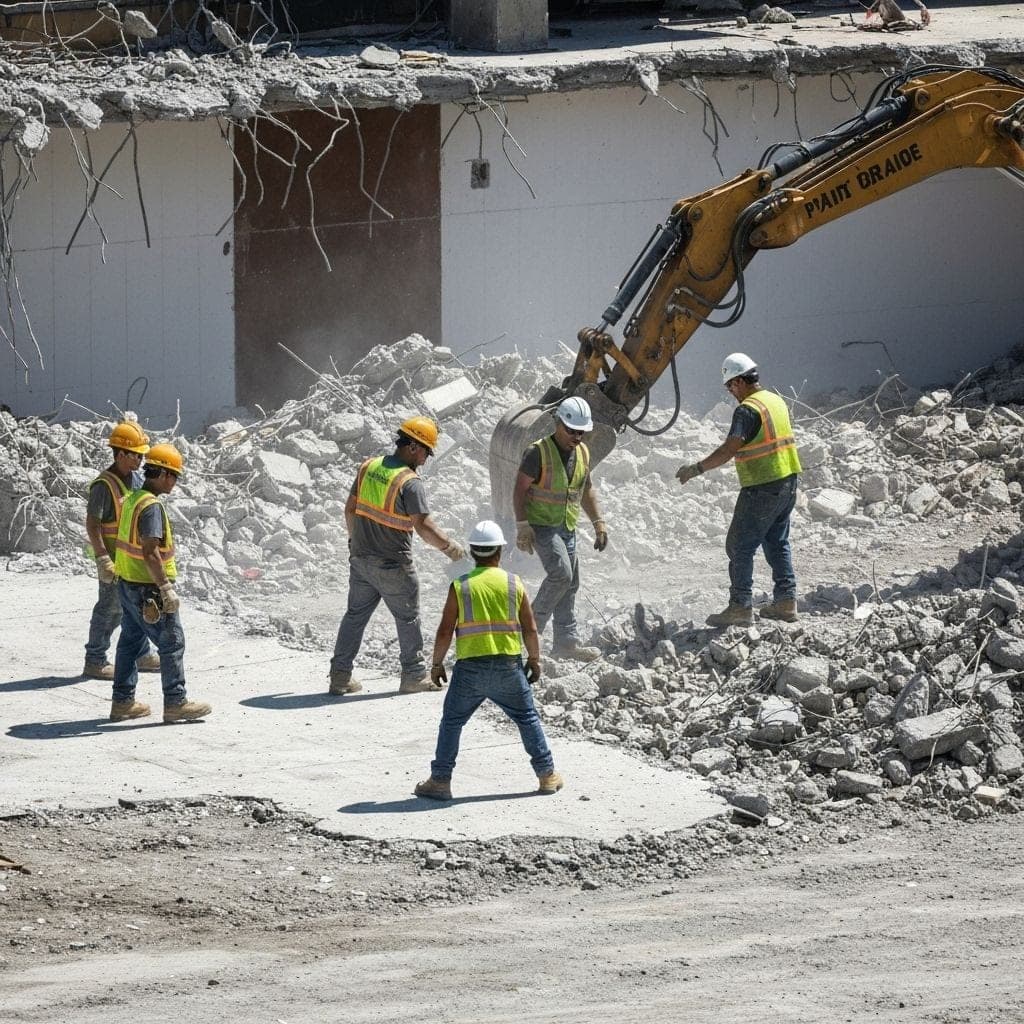
Heavy equipment operators with emergency demolition experience know how to work quickly while maintaining safety standards. The goal is removing the hazard efficiently, not creating new ones.
6. Debris Removal and Site Securing
After the structure is down, debris must be removed and the site secured. This includes:
- Hauling debris to appropriate facilities
- Separating recyclable materials when possible
- Grading the site to prevent water pooling
- Installing fencing and signage
- Documenting conditions for insurance purposes
Insurance Considerations for Emergency Demolition
Most property insurance policies cover emergency demolition when the damage results from a covered peril (fire, storm, vehicle impact, etc.). However, navigating the claims process requires attention to several factors.
Documentation
Before emergency demolition begins, document everything:
- Photographs and video of damage from multiple angles
- Written assessment from structural engineer if available
- Fire department or police reports
- Communication with insurance adjuster
Your demolition contractor should also document conditions before, during, and after work. This documentation supports your insurance claim and protects against disputes.
Adjuster Communication
Contact your insurance company immediately after a disaster. Many policies require prompt notification. Ask about:
- Coverage for emergency demolition
- Requirements for contractor selection
- Documentation needed for claims
- Timing expectations
Some adjusters want to inspect damage before demolition. If waiting creates safety hazards, communicate this clearly and document the urgency. Safety takes precedence over inspection convenience.
Debris Removal Coverage
Most policies include debris removal coverage, though limits vary. Understand your coverage before work begins to avoid unexpected costs. If debris removal limits are insufficient, discuss options with your adjuster.
Choosing an Emergency Demolition Contractor
When disaster strikes, you need a contractor who can respond immediately with the equipment, expertise, and permits to handle the situation safely.
Availability
True emergency service means 24/7 availability. Ask potential contractors:
- Do you offer after-hours emergency response?
- How quickly can you have a crew on-site?
- Do you have equipment staged for rapid deployment?
Experience
Emergency demolition requires different skills than planned demolition. Look for contractors with:
- Documented experience with fire, storm, and structural failure response
- Relationships with city officials for expedited permitting
- Utility company emergency contacts
- Insurance company familiarity
Equipment
Emergency response requires appropriate equipment immediately available:
- Excavators with various attachments
- Trucks for debris hauling
- Safety equipment for hazardous conditions
- Lighting for night operations
- Temporary fencing and barriers
Licensing and Insurance
Verify the contractor holds proper licenses and carries adequate insurance. In emergency situations, shortcuts on credentials create liability exposure for property owners.
Makki Demolition Emergency Response
At Makki Demolition, we understand that emergencies demand immediate action. Our Calgary-based team provides 24/7 emergency demolition services for:
- Fire damage: Rapid response to secure fire-damaged structures and remove hazards
- Storm damage: Immediate deployment after severe weather events
- Structural failure: Expert assessment and controlled demolition of compromised buildings
- Vehicle impact: Quick response to accident-damaged structures
Our emergency response includes:
- Crews available around the clock
- Established relationships with Calgary utility providers
- Experience with expedited city permitting
- Proper equipment staged for rapid deployment
- Full hazardous material abatement capabilities
- Comprehensive documentation for insurance claims
When disaster strikes your property, you need a team that responds quickly, works safely, and handles the situation professionally. We coordinate with insurance adjusters, city officials, and utility companies so you can focus on recovery.
Contact our emergency line at +1 (403) 392-2803 for immediate response, or reach us online to discuss emergency preparedness planning. We're here when you need us most.
Frequently Asked Questions
How quickly can emergency demolition begin after a disaster?
For immediate safety hazards, crews can often be on-site within hours. The timeline depends on utility disconnection, permit coordination, and hazardous material assessment. We work to begin as quickly as safely possible.
Do I need a permit for emergency demolition in Calgary?
Yes, demolition permits are required. However, the City of Calgary has provisions for expedited processing in emergencies. In extreme cases where life safety is at immediate risk, work may proceed with documentation following.
Will insurance cover emergency demolition costs?
Most property insurance policies cover emergency demolition when damage results from covered perils like fire or storms. Contact your insurance company immediately and document all damage thoroughly.
What if my building has asbestos and needs emergency demolition?
Asbestos must still be addressed, but emergency protocols allow for expedited assessment and abatement. Our licensed abatement team can handle hazardous materials on emergency timelines.
Can you work at night or on weekends?
Yes. Our emergency services operate 24/7, including nights, weekends, and holidays. Disasters don't wait for business hours, and neither do we.
What areas do you serve for emergency demolition?
We provide emergency demolition services throughout Calgary and surrounding communities including Airdrie, Cochrane, Chestermere, and Okotoks.
Need Professional Demolition Services?
Contact Makki Demolition for a free estimate on your project.